

Washington, DC – December 12, 2025
The International Monetary Fund (IMF) Executive Board has approved an immediate disbursement of about US$38.15 million to The Gambia following the completion of the Fourth Review under the Extended Credit Facility (ECF) and the First Review under the Resilience and Sustainability Facility (RSF).
The Executive Board meeting, held at the IMF Headquarters in Washington, DC.
Under the ECF arrangement, approved in January 2024, the completion of the fourth review allows for the disbursement of SDR12.44 million (about US$17.00 million), bringing total disbursements under the facility to SDR49.75 million (approximately US$68.00 million). The Board also completed the first review under the RSF arrangement, approved in June 2025, enabling a further SDR15.54 million (about US$21.24 million) to support climate resilience and long-term macroeconomic stability.
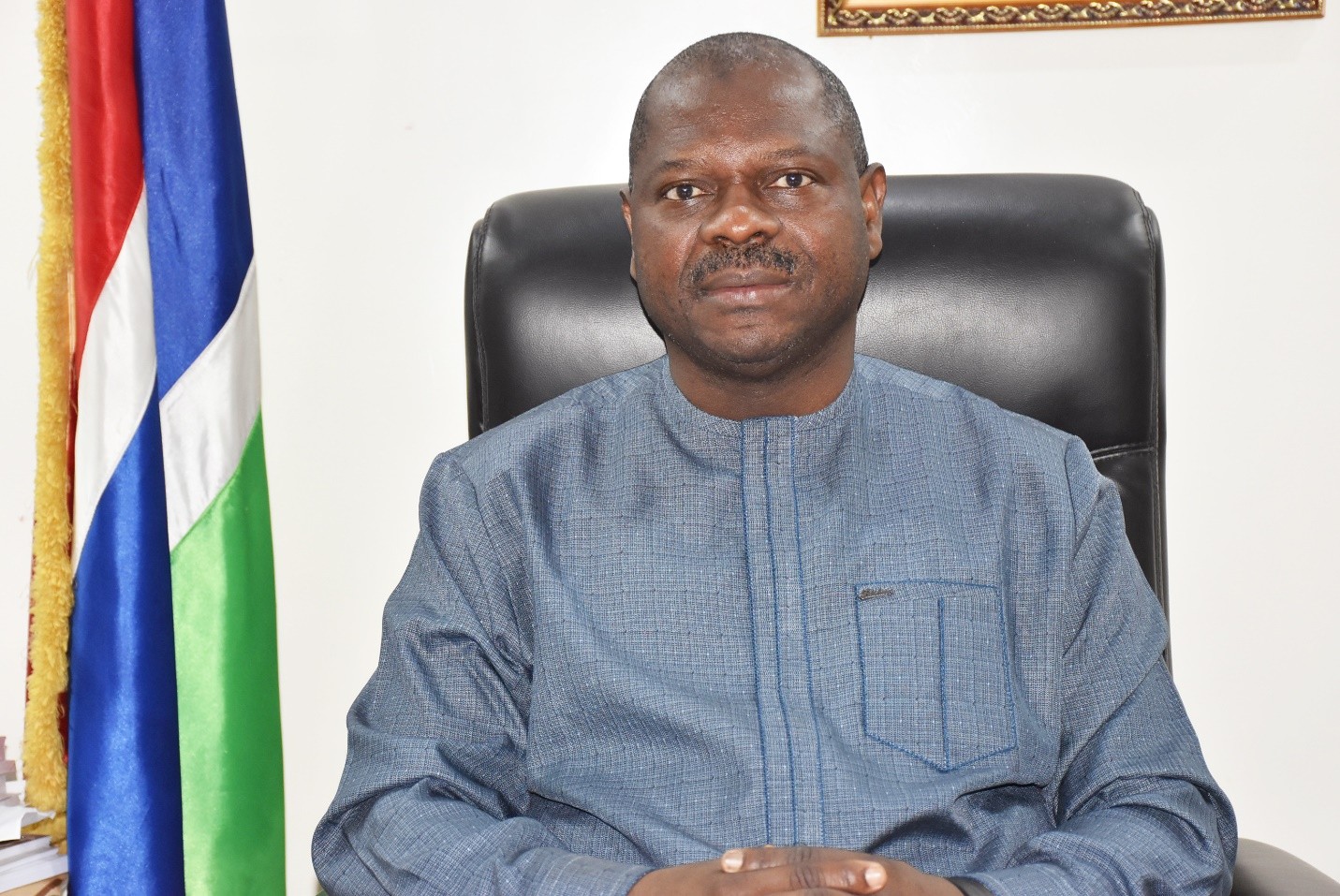
In his statement, the Acting Chair and Hon. Minister of Finance and Economic Affairs, Seedy K.M. Keita, noted that The Gambia’s economy continues to experience robust growth and declining inflation. He also highlighted that the implementation of the Extended Credit Facility programme has been satisfactory, while reforms under the Resilience and Sustainability Facility are advancing, despite ongoing global geopolitical uncertainties. The authorities, he affirmed, remain fully committed to the reform agenda.
Addressing fiscal policy, the Acting Chair underscored the Government’s determination to meet the 2025 fiscal targets, even in the face of a delayed disbursement from Africa50. He explained that this would be achieved through strong tax collection measures and expenditure restraint, including strict prioritisation and tighter control of cash allocations.
Furthermore, the Hon. Minister stressed that it is critical to avoid spending overruns during the election period and to sustain fiscal consolidation over the medium term in order to build fiscal buffers, preserve debt sustainability, and safeguard social and development spending. Strengthening public financial management, he added, will further reinforce fiscal discipline and accountability, alongside efforts to limit fiscal risks from state-owned enterprises and public-private partnerships.
On monetary and exchange rate policies, the Acting Chair emphasised that maintaining price stability and a market-determined exchange rate remain key priorities. He noted that the central bank should ensure any easing of the current tight monetary policy stance remains data-dependent, supporting continued convergence of inflation toward the medium-term target.
Furthermore, Hon. Keita also welcomed the improved functioning of the foreign exchange market following recent policy measures, and described the central bank’s commitment to cease direct or indirect financial support to public entities as a positive step toward safeguarding its financial position. Thus, strengthening regulatory capacity, risk-based supervision and monitoring of sovereign risk exposures, he said, remains essential for financial sector stability.
Turning to governance and structural reforms, the Acting Chair highlighted the need for continued progress in strengthening governance, enhancing the anti-corruption framework and improving the business environment to foster private sector development and job creation. He identified the operationalisation of the Anti-Corruption Commission, pending National Assembly approval, as a key reform milestone.
On climate resilience, the Acting Chair stated that steadfast implementation of the climate change agenda under the RSF will bolster The Gambia’s resilience to natural disasters and support long-term macroeconomic and balance of payments stability. Going forward, he stressed the importance of careful sequencing of reforms under both the ECF and RSF, supported by targeted capacity development.
The IMF’s approval of the latest disbursements reflects continued confidence in The Gambia’s economic reform programme and its efforts to sustain growth while strengthening fiscal discipline, governance and climate resilience.
By Mahzouba Maya Faal
Communication Officer, MoFEA