By Fatou B. Cham
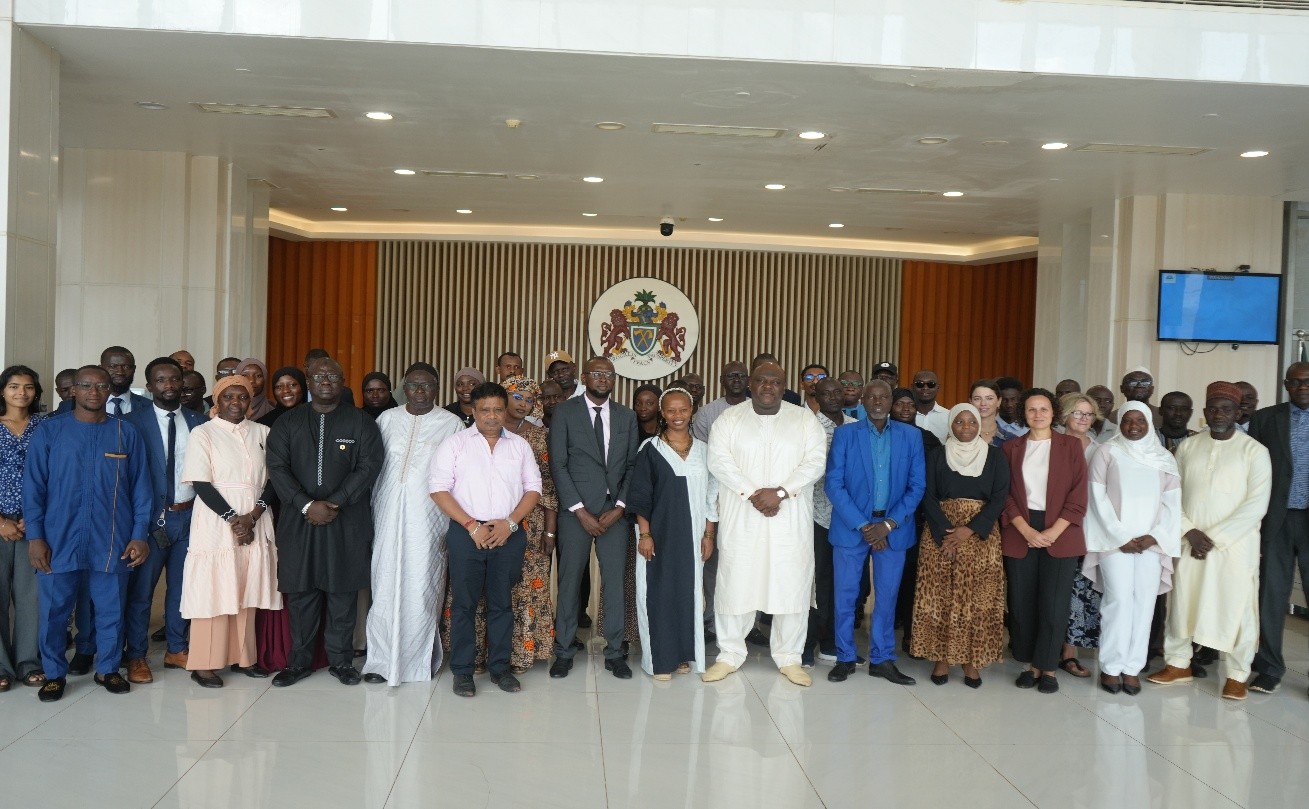
The Ministry of Finance and Economic Affairs (MoFEA), in collaboration with the National Disaster Management Agency (NDMA), the World Bank and the Centre for Disaster Protection (CDP), has commenced a two-day validation workshop on The Gambia’s first National Disaster Risk Financing (DRF) Strategy.
The workshop, held from September 29–30, 2026, at the Sir Dawda Kairaba Jawara International Conference Centre, brings together key stakeholders to review and validate the draft Strategy before its submission for Government consideration and approval.
The Strategy seeks to strengthen The Gambia’s financial preparedness for disasters and climate-related shocks by establishing a framework for mobilizing and deploying resources before, during and after disasters.
Speaking at the opening ceremony, Baboucarr Jobe, Permanent Secretary at MoFEA said disasters pose significant fiscal and economic risks, placing pressure on the national budget and potentially diverting resources from development priorities.
He said the Strategy represents a shift from a largely reactive approach to a more proactive, predictable and risk-informed system of disaster financing.
According to Jobe, the analysis estimates The Gambia’s average annual disaster financing needs at approximately US$2.5 million, while severe events could require significantly more. The proposed framework therefore adopts a risk-layered approach based on risk retention, contingent financing and risk transfer.
He also stressed the importance of linking disaster financing with social protection systems, strengthening risk information and fiscal-risk management, and developing the domestic insurance market to enable households, farmers and businesses to better manage risks.
P.S Jobe said the development of the Strategy is only the beginning, noting that its success will depend on effective implementation, strong institutional coordination, resource mobilization and integration into broader fiscal and development planning.
Director of Climate Finance at MoFEA, Isatou F. Camara, said the validation workshop marks an important milestone following several technical workshops and consultations with development partners and stakeholders.
She said the process has focused on understanding The Gambia’s exposure to disaster-related physical risks and identifying appropriate mechanisms to strengthen the country’s financial preparedness.
Representing the World Bank Group, Alieu Kah said the Strategy builds on consultations and technical workshops held since 2025, which examined disaster risks, financing instruments and the institutional arrangements needed to respond effectively to shocks.
He emphasized that disaster risk financing requires coordination across public finance, disaster management, climate, social protection and insurance sectors.
Mr. Kah encouraged stakeholders to assess whether the proposed responsibilities and actions are clear, achievable and supported by the necessary institutional and legislative frameworks before the Strategy proceeds to Government endorsement.
He reaffirmed the World Bank Group’s support through technical assistance, financing and policy dialogue, noting that initiatives under the RISE project—including the Gambia Social Registry, digital payments and adaptive social protection financing—can help connect disaster financing to timely assistance for affected households.